
Antifreeze and Cats: Why It's So Dangerous
8 July 2026
5 min read
Antifreeze (ethylene glycol) is one of the deadliest common household toxins for cats. Its sweet taste attracts curious drinkers — and antifreeze is toxic to cats in tiny amounts.
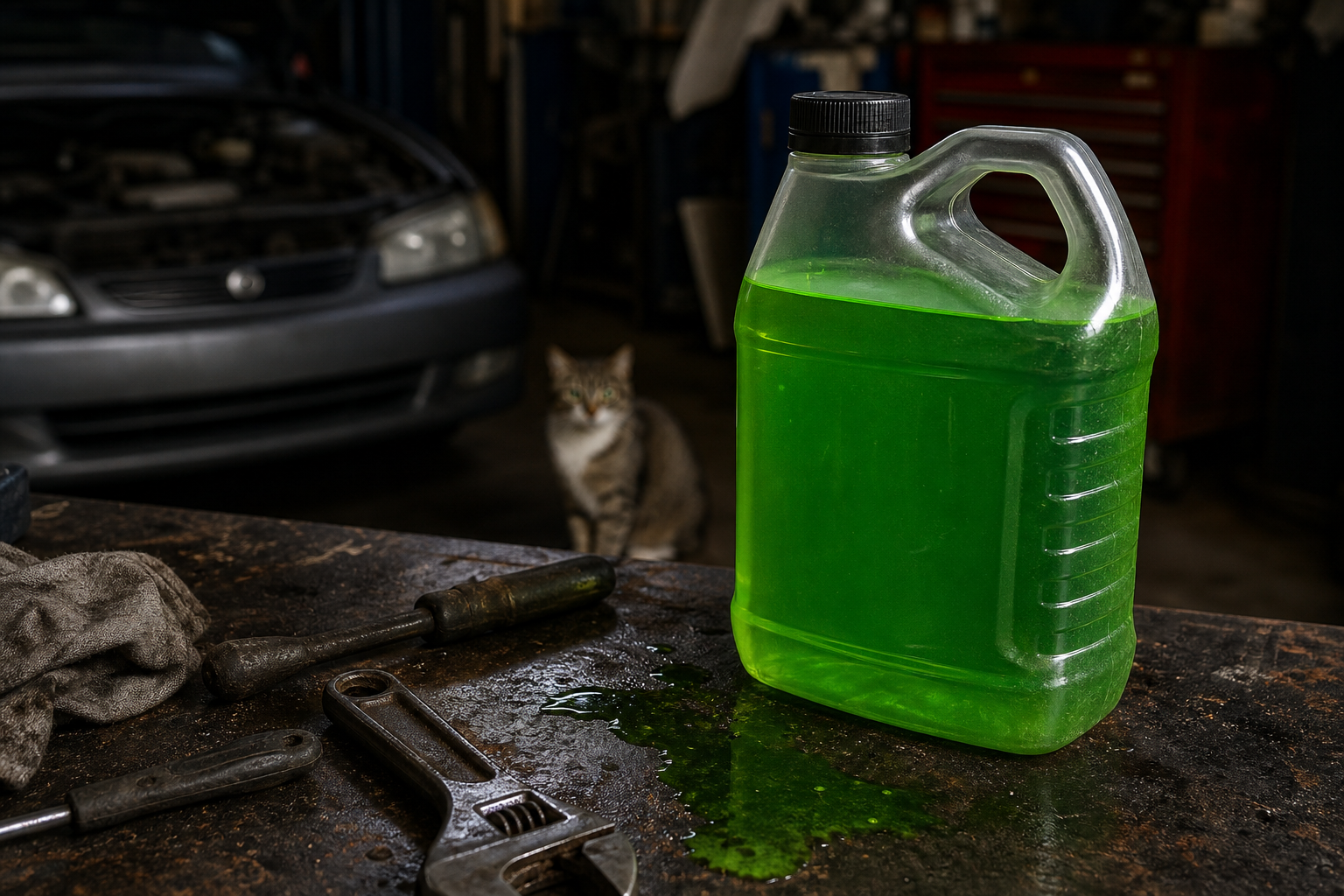
Emergency — even small amounts
A teaspoon of antifreeze can kill a cat. If you suspect ingestion, go to emergency care immediately. Do not wait for symptoms.
Why antifreeze is so dangerous
Ethylene glycol forms crystals in the kidneys, causing rapid acute kidney failure. Early signs can look like drunkenness — wobbling, nausea, increased thirst. Within 12–24 hours, irreversible kidney damage may follow.
Where cats encounter antifreeze
- Garage spills and radiator leaks
- Uncapped containers on shelves
- Winterised outdoor pipes and garden equipment
- Imported products without bittering agents
Prevention tips
Clean spills immediately with cat locked out. Store antifreeze in sealed containers on high shelves. Check your garage and driveway regularly. See common cat toxins by room for garage hazards.