
Can Cats Eat Chocolate? What to Do If They Do
Chocolate is one of the most common cat poisoning calls vets receive — often because a curious cat licked a wrapper or stole a bite from a plate. If you're asking can cats eat chocolate, the answer is no. Here is why it is risky, what symptoms to watch for, and what to do right now.
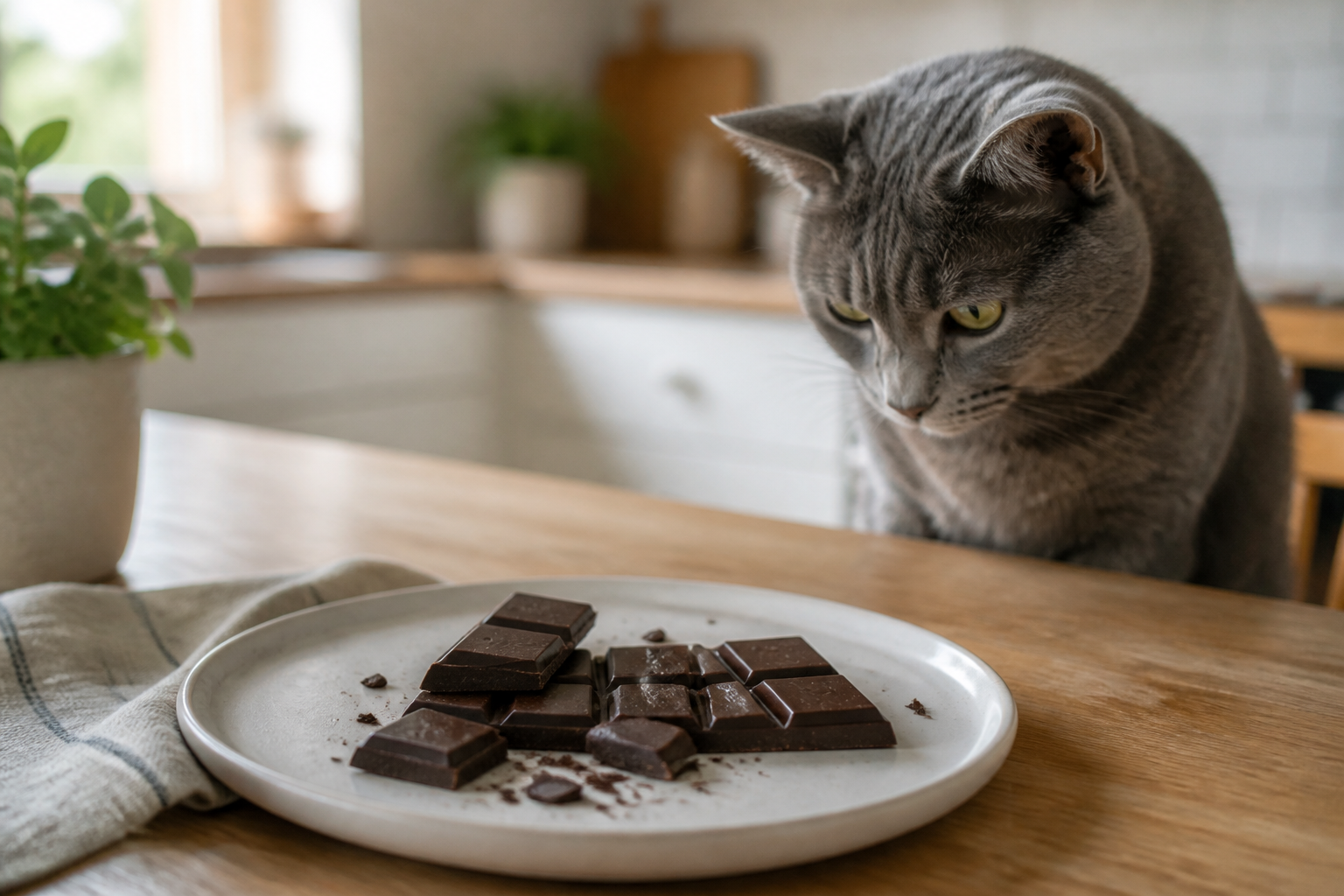
Dark chocolate is the biggest risk
The darker the chocolate, the more theobromine it contains. Baking chocolate and high-cocoa bars are far more dangerous than milk chocolate — but none is safe for cats.
Why chocolate is toxic to cats
Cats cannot metabolise theobromine and caffeine efficiently. These compounds build up and affect the heart, kidneys, and nervous system. Cats are generally less likely than dogs to eat large amounts, but small cats and kittens are vulnerable to even tiny doses.
Symptoms of chocolate poisoning in cats
- Vomiting and diarrhoea
- Restlessness or hyperactivity
- Increased heart rate
- Tremors and muscle twitching
- Seizures in severe cases
What to do if your cat eats chocolate
Call your vet immediately with the type of chocolate, approximate amount, and your cat's weight. Do not induce vomiting unless instructed. Keep wrappers for ingredient information — some products also contain xylitol or nuts. For a full list of dangerous foods, see 25 human foods cats should never eat.
Hidden chocolate hazards
Check cocoa powder in baking, chocolate-coated treats, advent calendars, and Easter eggs left within reach. Easter hazards for cats covers seasonal risks in detail.