
25 Human Foods Cats Should Never Eat
Sharing food feels like love — but many everyday human foods are dangerous for cats. Some cause immediate illness; others build up silently over time. Here are 25 foods toxic to cats that should never be on your cat's menu.
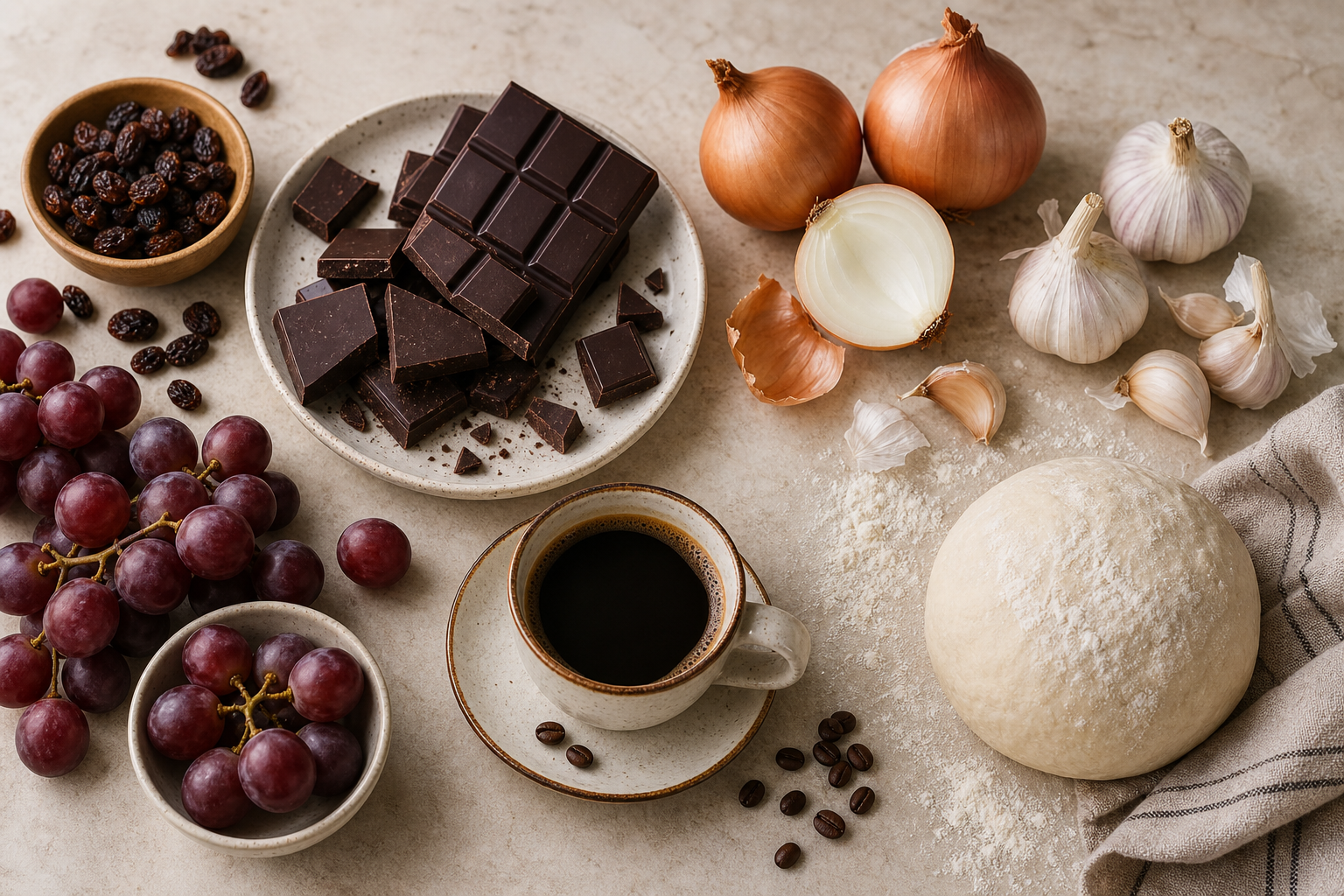
No safe amount for some foods
For foods like chocolate, onions, grapes, and xylitol, even small amounts can be dangerous — especially for kittens and small cats. When unsure, call your vet.
The most dangerous human foods for cats
Chocolate
Theobromine and caffeine in chocolate affect a cat's heart and nervous system. Dark and baking chocolate are the most dangerous. Read our chocolate guide for symptoms and emergency steps.
Onions, garlic, and all alliums
Raw, cooked, or powdered — alliums damage red blood cells and cause anaemia. Garlic powder in gravies and baby food is a common hidden source. Learn more about onion and garlic toxicity.
Grapes and raisins
Kidney failure is well documented in dogs; cats are less studied but treated as high risk. See our grapes and raisins guide.
Alcohol and caffeine
Beer, wine, cocktails, coffee, tea, and energy drinks can cause vomiting, tremors, breathing problems, and coma in cats. Keep cups out of reach.
Xylitol
This sugar substitute appears in sugar-free gum, sweets, peanut butter, and baked goods. It can cause dangerous blood sugar drops and liver damage.
Raw bread dough
Yeast continues rising in a warm stomach, producing alcohol and painful bloating. Never leave proving dough on the counter.
More foods to keep away from cats
- Avocado (persin can cause vomiting and diarrhoea)
- Macadamia nuts
- Raw eggs (salmonella risk; avidin affects biotin)
- Raw fish and bones (choking and thiamine issues)
- Cooked bones (splintering risk)
- Fat trimmings and greasy scraps (pancreatitis risk)
- Salt-heavy snacks and stock cubes
- Nutmeg and other baking spices in large amounts
- Green potatoes and tomato plant leaves
- Mouldy or spoiled food (mycotoxins)
- Human vitamin and mineral supplements (iron overdose risk)
- Marijuana and CBD edibles
- Cow's milk — usually causes digestive upset rather than true poisoning. Is milk bad for cats?
What to do if your cat eats human food
Note what they ate, how much, and when. Call your vet — do not wait for symptoms with chocolate, onions, grapes, or xylitol. Follow our emergency checklist to prepare for the call.