
Is Something Toxic to Cats? The Quick Toxic Kitty Guide
Cats explore the world with their mouths. A dropped pill, a houseplant leaf, or a bite of your dinner can turn a quiet evening into an emergency. Whenever you wonder is something toxic to cats, this quick guide helps you assess risk, spot symptoms, and know when to call the vet.
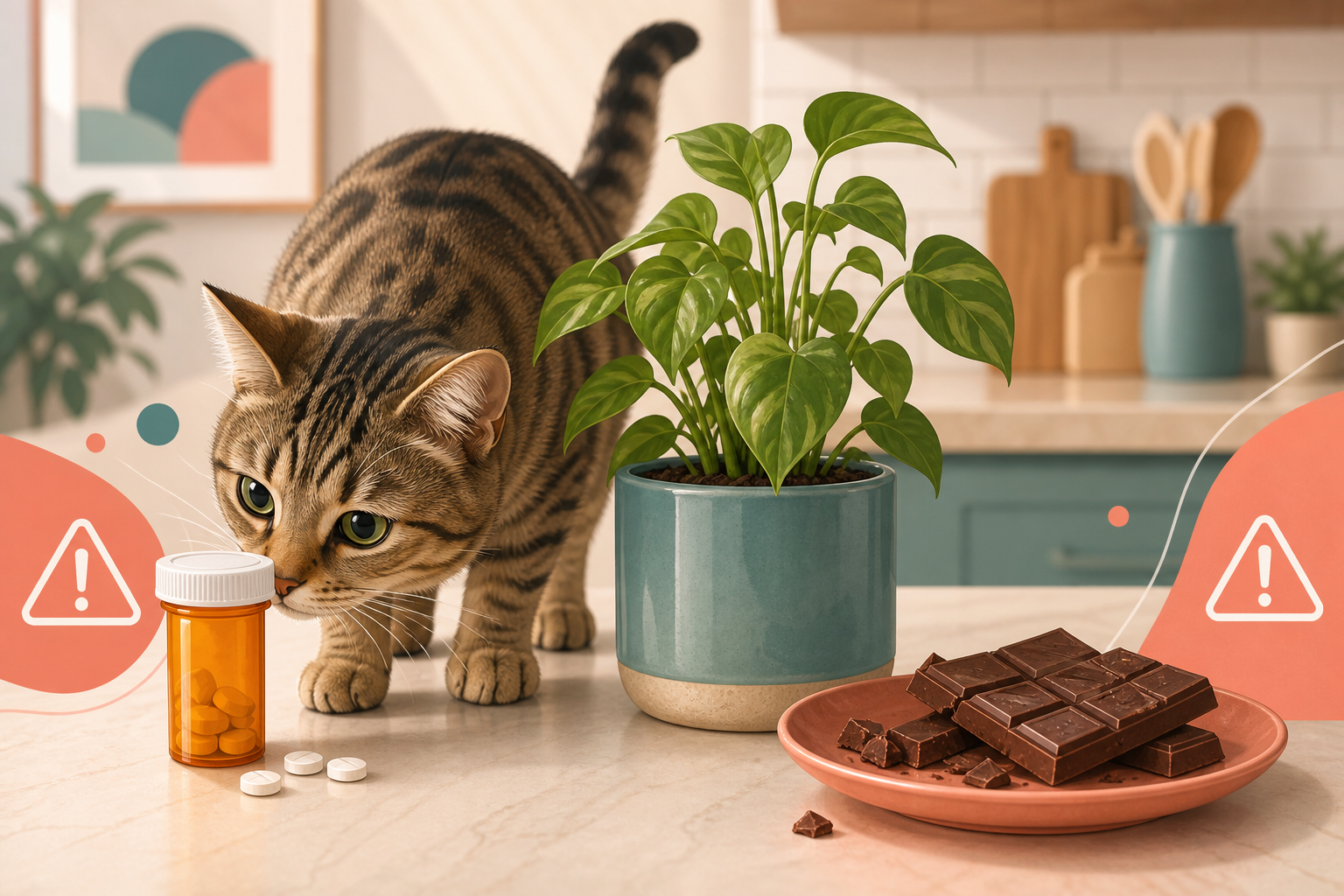
When in doubt, call your vet
Never wait for symptoms if you know your cat ate something dangerous. Early treatment saves lives — and often costs far less than waiting until kidney or liver damage sets in.
Step 1: Identify what your cat ate
Grab the packaging, plant label, or medicine bottle if you can. Note the product name, active ingredients, and approximate amount. If it was food, estimate portion size relative to your cat's body weight. A crumb of dark chocolate is very different from a whole bar for a 3 kg kitten.
Scan it in seconds
Use the Toxic Kitty app scanner to check food, plants, and household products before panic sets in. Save results to your cat's profile for faster vet calls.
Step 2: Understand the risk level
- High risk — act immediately: Lilies, paracetamol, antifreeze, rat poison, dog flea treatments with permethrin, and many human medicines. See our emergency checklist for what to gather before you call.
- Moderate risk — call vet promptly: Chocolate, onions, garlic, grapes, essential oils, and cleaning product residue. Symptoms may take hours to appear.
- Lower risk — still worth checking: Milk (usually intolerance, not poison), mild plant nibbles, or a single lick of diluted cleaner. Monitor closely and call if anything changes.
Step 3: Watch for poisoning symptoms
Common signs include vomiting, drooling, lethargy, loss of appetite, tremors, breathing changes, and seizures. Some toxins — especially lilies — cause few early signs before serious organ damage. Read our full cat poisoning symptoms guide so you know what to watch for hour by hour.
Step 4: What to do (and what not to do)
- Call your vet or an emergency clinic immediately — do not wait for symptoms.
- Do not induce vomiting unless your vet specifically tells you to. Some toxins cause more damage on the way back up.
- Keep your cat calm and prevent further access to the substance.
- Bring packaging, photos, and a timeline of when exposure happened.
When to call the vet now
Call immediately if your cat ate lilies, human medicine, antifreeze, rat bait, or dog-only flea treatment — or if they show vomiting, collapse, seizures, or difficulty breathing. Use our emergency checklist to prepare the information your vet will ask for.